Sunday, August 03, 2014

Frozen (2013)


"Frozen," the latest Disney musical extravaganza, preaches the importance of embracing your true nature but seems to be at odds with itself.

The animated, 3-D adventure wants to enliven and subvert the conventions of typical Disney princess movies while simultaneously remaining true to their aesthetic trappings for maximum merchandising potential. It encourages young women to support and stay loyal to each other—a crucial message when mean girls seem so prevalent—as long as some hunky potential suitors and adorable, wise-cracking creatures also are around to complete them.
It all seems so cynical, this attempt to shake things up without shaking them up too much. "Frozen" just happens to be reaching theaters as Thanksgiving and the holiday shopping season are arriving. The marketing possibilities are mind-boggling. And in the tradition of the superior "Beauty and the Beast" and "The Little Mermaid," surely "Frozen: The Musical" will be headed to the Broadway stage soon. The songs – which are lively and amusing if not quite instant hits—are already in place. 
Little girls will absolutely love it, though. That much is undeniable. And the film from co-directors Chris Buck ("Surf's Up") and Jennifer Lee is never less than gorgeous to watch. A majestic mountaintop ice castle is particularly exquisite—glittery and detailed and tactile, especially as rendered in 3-D.
But first we must witness the tortured backstory of the film's princesses – not one, but two of them. The script from "Wreck-It Ralph" co-writer Lee, inspired by the Hans Christian Andersen story "The Snow Queen," has lots of cheeky, contemporary touches but is firmly and safely rooted in Scandinavian fairy tale traditions.
When they were young girls, sisters Anna and Elsa were joyous playmates and inseparable friends. But Elsa's special power—her ability to turn anything to ice and snow in a flash from her fingertips—comes back to haunt her when she accidentally zaps her sister. (Not unlike the telekinesis in "Carrie," Elsa inadvertently unleashes her power in moments of heightened emotion.) A magical troll king heals Anna and erases the event from her memory, but as for the sisters' relationship, the damage is done.
Elsa's parents lock her away and close down the castle, which devastates the younger Anna. (Of the many tunes from "Avenue Q" and "The Book of Mormon" songwriter Robert Lopez and his wife, Kristen Anderson-Lopez, the wistful "Do You Want to Build a Snowman?" is by far the most poignant.) But once they reach adolescence and it's Elsa's turn to take over the throne at age 18, the two experience an awkward reunion.
The perky, quirky Anna (now voiced by a likable Kristen Bell) is a little nervous but overjoyed to see her sister. The reserved and reluctant Elsa (Broadway veteran Idina Menzel) remains distant, and with gloved hands hopes not to freeze anything and reveal her true self on coronation day. But a run-in with an amorous, visiting prince (Santino Fontana) who sets his sights on Anna triggers Elsa's ire, and she inadvertently plunges the sunny, idyllic kingdom into perpetual winter.
Flustered and fearful, Elsa dashes away in a fit of self-imposed exile – which significantly weakens "Frozen," since she's the film's most complicated and compelling figure. On her way to the highest mountain she can find, Elsa belts out the power ballad "Let It Go," her version of "I Am Woman." This soaring declaration of independence is the reason you want a performer of Menzel's caliber in this role, and it's the film's musical highlight. (Her flashy physical transformation from prim princess to ice queen does make her resemble a real housewife of some sort, however.)
Afterward, though, the story settles in on Anna's efforts to retrieve her sister and restore order to the kingdom. Along the way she gets help from an underemployed ice salesman named Kristoff (Jonathan Groff) and his trusty reindeer sidekick, Sven. They all meet up with a singing snowman named Olaf (a lovably goofy Josh Gad, star of "The Book of Mormon" on Broadway) who dreams of basking in the warmth of the summer sun. This "Wizard of Oz"-style quartet makes the obstacle-filled trek to the imposing fortress that awaits. (At least "Frozen" has the decency to borrow from excellent source material.)
While the journey may seem overly familiar, the destination has some surprises in store. Some come out of nowhere and don't exactly work. But the biggie—the one that's a real game-changer in terms of the sorts of messages Disney animated classics have sent for decades—is the one that's important not just for the little girls in the audience, but for all viewers. It's so innovative, it makes you wish everything about the film met the same clever standard.

Download vai Torrent :


Joe (2013)


I don't think that I am stepping too far out of line by suggesting that Nicolas Cage has had a somewhat spotty cinematic track record as of late—factor out the rare excellent films such as "Adaptation" and "Bad Lieutenant: Port of Call, New Orleans" and the occasional cult curiosity like "Knowing" or the wildly underrated and genuinely misunderstood remake of "The Wicker Man" and one is left with one chunk of junk after another that has seen him squander his considerable talents. Perhaps even Cage himself has begun to realize that something needed to change because his latest film, the powerful drama "Joe," could not be further removed from his recent string of failures and his work in it is one of the keys to its success. This is not just the best performance that he has given in ages—this is one of the very best performances of his long and strange career.

 Cage plays Joe Ransom, a man who we can see has had a dark and brutal past even before we learn any of the details. He drinks and gambles, keeps an exceptionally nasty bulldog as his only real companion and has a long-running feud with a local tough guy (Ronnie Gene Blevins) that grows more violent with each exchange. On the other hand, he is reasonably friendly and gregarious to those he trusts and inspires a lot of loyalty in return, especially in regards to the road crew of day laborers that he employs to poison trees on behalf of a local lumber company.
One day, a new kid named Gary (Tye Sheridan) shows up looking for work and Joe is impressed with his strong work ethic. He begins to take Gary under his wing and soon discovers that he is squatting in an abandoned house with his mother, sister and his father, Wade (Gary Poulter), a monstrous and abusive drunk whose idea of a hard day's work is smacking his son around and taking the kid's earnings for himself. Joe does what he can for Gary and a real friendship develops between the two but at a certain point, it becomes painfully evident that he can either ignore the boy's plight and watch him go down into the darkness that once consumed him or step in to save the kid, even at the cost of everything that he has struggled to achieve.


Based on the 1991 novel by Larry Brown, "Joe" was directed by David Gordon Green, and, like his star, his is a career that has also undergone a couple of inexplicable twists and turns. After making his debut with the extraordinary indie film "George Washington," he went on to make the equally compelling dramas "All the Real Girls," "Undertow" and "Snow Angels" before making his unexpected mainstream breakthrough with the decidedly different stoner comedy "Pineapple Express." That movie was pretty funny but he followed that up with "Your Highness," a fantasy spoof that is one of the biggest botches made by a recognizably great filmmaker of recent times, and "The Sitter," another misfired comedy whose main selling point is that it wasn't quite as unwatchable as its predecessor.
Green returned to his low-budget roots last year with the amiable comedy-drama "Prince Avalanche" and with "Joe," he firmly reestablishes himself as one of the great American filmmakers of our time. With its rural setting and a narrative structure that is more interested in developing character and mood than it is in going from plot point to plot point, this material is right up Green's alley but rather than simply going through the familiar paces in the hopes of reestablishing his artistic credibility, he finds new ways to challenge himself as a storyteller. Although the basic plot, adapted for the screen by Gary Hawkins, may sound fairly familiar, he approaches it in a manner that is both shockingly intimate in its details and borderline mythic in terms of the emotional upheaval that the characters go through—you might have to go back to Charles Laughton's classic "The Night of the Hunter," another Southern Gothic masterpiece of note, to see anything like it.
One of Green's great gifts as a filmmaker is his ability to create a real sense of mood and place throughout. With the aid of some excellent location scouting and the contributions of ace cinematographer Tim Orr (who has shot all of Green's previous features), "Joe" presents a world that will ring true to audiences at all points of the socio-economic spectrum—a place where friendship and loyalty are more than mere buzzwords even as the threat of unimaginable violence and brutality lurks around every corner, whether it comes from the bite from a venomous snake or a punch from an equally poisonous father—without ever coming across as forced or condescending. Green is a truly empathetic filmmaker and his ability to put audiences in the shoes of his characters has never been better than it is here.
Cage is amazing here as Joe—fully divested of the quirky mannerisms that have dogged most of his performances of late, he has created a characterization that is as spare, lean and undeniably effective as anything he has ever done. Whether he is tapping into some extremely dark areas of Joe's psyche or slowly bonding with Gary, Cage is so fully immersed in the character that there is never a moment when we catch him acting—his movie star aura disappears and he simply becomes Joe. Whether this means that he is leaving the obvious junk behind to focus on smarter, smaller projects remains to be seen (and he does have the new film version of "Left Behind" on the horizon), his work here is the first evidence in a while that the actor that first knocked viewers out back in the day has resurfaced.
The other stunning performance in the film comes from Gary Poulter as Gary's vile father, one of the most indelible depictions of pure evil that you will ever see. Not recognizing the name or his face, I looked him up after the screening and was stunned to discover that he was a homeless man who had never acted before (with the exception of Cage and Sheridan, the rest of the cast consists of non-professionals) that Green knew and cast in a role that would have challenged most "real" actors. Sadly, Poulter died shortly after the completion of this film, making it one of the great one-shot performances in the history of the cinema.
Make no mistake, "Joe," although possessing a certain degree of welcome dark humor at certain points and a sense of ultimate redemption that feels earned for once, is a defiantly bleak work that contains moments of physical and emotional violence brutal enough to startle even the most hardened of moviegoers. For anyone simply looking for a light and breezy film to sort of watch while passing away a Saturday night, it might not be the best choice. However, if your moviegoing needs are driven less by a need to "feel good" afterwards and more by a desire to see something that will grab and touch you in ways that you will not be shaking anytime soon, this is the movie for you.

Download vai torrent :

Friday, August 01, 2014

Now You See Me (2013)


Louis Leterrier’s directorial debut, "The Transporter," was the movie that established Jason Statham as an action star. It was also an important early hit for EuropaCorp, the French studio that kickstarted the careers of Pierre Morel ("Taken"), Olivier Megaton("Colombiana," "Taken 2"), and actor / director Guillame Canet ("Tell No One"). After helming two more movies for EuropaCorp — "Unleashed" and "Transporter 2" — Leterrier decamped to Hollywood, where he ended up directing the leaden, mega-budgeted movies "The Incredible Hulk" and "Clash of the Titans," the latter of which he has since disowned.


Leterrier’s new film, "Now You See Me," is in some ways a return to his roots. Like his two "Transporter" movies, it’s light on seriousness and heavy on style — a razzle-dazzle fantasy about a team of bank-robbing illusionists. It’s slick, deliberately silly, and sprinkled with visual confetti — Steadicam spins, lens flares, CGI trick shots.


The movie opens by introducing the four leads: a cocky street magician (Jesse Eisenberg); his former assistant (Isla Fisher), whose solo act focuses on gory stunts; a once-famous mentalist (Woody Harrelson) who's been reduced to using cold reading and hypnosis to shake down people for cash; and a sleight-of-hand artist (Dave Franco, brother of James) who moonlights as a pickpocket. A hoodie-wearing stranger slips each of them a Tarot card inscribed with a date and a New York address.

Flash forward to Las Vegas a year later, where the four now perform as a headlining act called the Four Horsemen. For their big finale, they present a complicated illusion where a random audience member appears to be teleported into the vault of his bank. The audience member is told to turn on the vault's ventilation system, which sucks up a palette of Euros; a few seconds later, the bills rain down over the audience. The crowd goes wild.
The next day, the magicians are brought in for questioning by the FBI; it seems the audience member's bank has been robbed, and a prop used in the magic act has been found at the scene. Soon, the magicians are being investigated by a surly agent (Mark Ruffalo) and an Interpol detective (Mélanie Laurent); they know the Four Horsemen are involved in the crime, but can't figure out how.
Also on the Four Horsemen's trail is a smug ex-magician (Morgan Freeman) who has made a fortune revealing the secrets behind well-known illusions. Freeman can make the clunkiest exposition sound good (see: Christopher Nolan's Batman movies, or the recent "Oblivion"); for the most part, that's what he's here to do. Turning Freeman into the movie's de facto on-camera narrator is "Now You See Me"'s neatest trick, especially since much of the movie's third act revolves around tweaking his all-knowing screen persona.
There is, of course, an explanation for the heist — and it isn't "magic" — but said explanation doesn't so much strain credibility as negate it. "Now You See Me" is proudly outlandish; the Four Horsemen's methods — which involve giant mirrors, doubles, hypnosis, copious amounts of flash paper, and, uh, holograms — are as logic-defying as their tricks. Had the movie ended by simply revealing that the four were wizards, it would be more believable.
That, however, wouldn't be as fun. Much of what makes "Now You See Me" so entertaining — in a gaudy, disposable, Vegas act sort of way — is its ever-escalating ridiculousness. After the bank job, the Four Horsemen go on a series on ever-more-complicated heists, which turn them into fugitives and folk heroes. The movie, which began as "just" a bank-robbing magician story, eventually becomes a narrative Rube Goldberg contraption; conspiracies, secret identities, decades-old vendettas, and occult brotherhoods are involved.
The second half of the movie is effectively one long, protracted chase, with Ruffalo and Laurent always a few steps behind the Four Horsemen. It's here that Leterrier seems to really be in his element; a lengthy fight scene where Franco fends off FBI agents using throwing cards and sleight-of-hand tricks is as poppy and kinetic as anything in "The Transporter."
Like the EuropaCorp movies that started Leterrier's career, "Now You See Me" emphasizes cinematography over just about everything else, including narrative sense. Unusually, it has two directors of photography, both of whom are specialists in flashy, special-effects-ready extravagance: Mitchell Amundsen ("Transformers," "Wanted") and Larry Fong ("Super 8," as well as the Zack Snyder movies "300," "Watchmen" and "Sucker Punch").
Just as unusually — at least for an effects-heavy production — it's shot on celluloid with anamorphic lenses. This gives the movie a retro visual texture and a more classical sense of widescreen space; the trade-off is that the digital effects look less convincing than they would in a digitally-shot movie. However, in a film where nothing is supposed to be credible, mediocre CGI seems appropriate. It’s not meant to seem realistic, so why should it look real?

Download vai torrent :

Thursday, July 31, 2014

The Lego Movie (2014)


Everything in "The Lego Movie" is, indeed, awesome.
Awesome as in imagine if "Toy Story" were spoofed by Mel Brooks after he ate magic mushrooms while reading George Orwell's 1984.


Awesome as in the sort of silly yet wily kid-appropriate PG-rated performance by Will Ferrell that you've been waiting for ever since "Elf" came out more than a decade ago.
Awesome as in geeking out over the sight of a grim little Batman hitching a ride on the Millennium Falcon piloted by a smart-ass little Han Solo—with a suavely plastic Lando Calrissian in a flash of a cameo.
To be honest, my enthusiastic reaction might be slightly skewed by the fact that "Everything Is Awesome" is both the title and most insidious lyric of a catchier-than-a-Norovirus musical number whose sweeping camerawork over a Lego-ized cityscape is almost as impressive as the opening sequence of "West Side Story". Somehow, the dastardly ditty has taken up permanent residence in my brain, snaking into the cubby hole previously occupied by the Pee-wee's Playhouse TV-show theme.
Normally, I oppose the trend of plaything-based moviemaking, especially when the results are as brain-numbingly awful as "Transformers", "G.I. Joe" and "Battleship". But if those uninspired efforts had featured not just Michelangelo the Teenage Mutant Ninja but also Michelangelo the ultimate Renaissance artist as they fight for the greater good of interlocking mankind, maybe they would have changed my mind, too.
Besides, with so many animation powerhouses settling for easy-money sequels lately (we mean you, Pixar, DreamWorks, Universal and 20th Century Fox), it is exceedingly cool that a major-studio family film refuses to simply capitalize on merchandising spinoffs by offering an oppressive 100-minute commercial. Instead, "The Lego Movie" manages to be a smartly subversive satire about the drawbacks of conformity and following the rules while celebrating the power of imagination and individuality. It still might be a 100-minute commercial, but at least it's a highly entertaining and, most surprisingly, a thoughtful one with in-jokes that snap, crackle and zoom by at warp speed.
This surreal 3-D computer-animated pop-cultural cosmos overseen by directors/co-writers Phil Lord and Chris Miller, the talented team behind 2009's "Cloudy With a Chance of Meatballs", takes off from those countless amateur fan-produced stop-motion films found online before concluding with rather ingenious live-action interlude.
For once, an overly familiar plot is intended to be overly familiar as this action comedy lampoons nearly every fantasy-sci-fi-comic-book-pirate-cowboy movie cliché that has been in existence at least since George Lucas and Steven Spielberg turned Hollywood into a blockbuster-producing boy-toy factory.
Our unlikely hero is Emmet (earnestly and engagingly voiced by Chris Pratt of TV's "Parks and Recreation"), an unremarkable construction worker who is perfectly happy with his staid generic existence as an ordinary citizen of the metropolis of Bricksburg. As is the custom among his peers, Emmet doesn't just avoid overthinking. He barely thinks at all.
But after dawdling on a work site after hours, Emmet finds himself tumbling into an underworld where a wise Obi-Wan Kenobi-type wizard named Vitruvius (Morgan Freeman, mocking his history of movie mentorships) mistakenly declares him to be the Special, the greatest Master Builder of them all. Unfortunately, special is exactly what Emmet isn't and he appears to be ill-equipped to battle the monstrous foe at hand. That would be Ferrell's President Business, a maniacal manipulator whose looming overlord alter-ego is a sly nod at the actor's despot in "Megamind".
The minute that a swivel-headed henchman named Bad Cop/Good Cop starts spouting menacing threats in Liam Neeson's Irish-inflected rumble, you know that a "release the Kraken!" joke can't be far behind. And "The Lego Movie" does not disappoint, as Ferrell's control-freak villain aims to glue all the pieces of the city in place permanently—no freeform deviations allowed.
From there, Emmet and would-be love interest Wyldstyle—a tough-chick cross between "The Matrix"'s Trinity and Joan Jett blessed with Elizabeth Banks's vocal spunk—enter a surreal hodge-podge universe where Lord of the Rings-style warriors, Star Wars and Harry Potter characters, superheroes, Abraham Lincoln and even basketball star Shaquille O'Neal (a legacy of an actual 2003 NBA-sanctioned Lego set) join forces to foil President Business's nefarious plan.
It isn't fair to reveal what happens next, other than to say that it continues to be, yes, awesome despite a paucity of female characters (toothache-sweet Unikitty who presides over Cloud Cuckoo Land doesn't quite count) and maybe a bit too much crash-boom bombast.
Alas, I would be remiss if I didn't issue a heads-up to parents: "The Lego Movie"'s tie-ins include 17 new building sets and 16 new characters. To ensure that your child's college fund is safe and your bills get paid this month, I would urge you to seek out a theater in a galaxy far, far away from a toy store.

Download vai :

Tuesday, July 29, 2014

Moon (2009)


Is "Moon" evoking "2001," or does its mining outpost on the far side of the moon simply happen to date back to the "2001" era (which was of course eight years ago)? I lean toward the second theory. After the mission carrying Dave Bowman disappeared beyond Jupiter, mankind decided to focus on the moon, where we were already, you will recall, conducting operations. In "Moon," the interior design of the new lunar station was influenced by the "2001" ship, and the station itself is supervised by Gerty, sort of a scaled-down HAL 9000 that scoots around.


At some point in the future (we can't nail down the story's time frame), this station on the far side is manned by a single crew member, Sam Bell (Sam Rockwell). He's working out the final days of a three-year contract and is close to cracking from loneliness. Talking to loved ones via video link doesn't satisfy. The station is largely automated; it processes lunar rock to extract Helium-3, used to provide Earth with pollution-free power from nuclear fusion. My guess is, the station is on the far side because you don't want to go gazing at the Man in the Moon some night and see a big zit on his nose.
The station is large and well-appointed, has entertainment resources and adequate supplies. Sam communicates frequently with the home office ... and so does Gerty. Sam doesn't do any actual mining, but his human hands and brain are needed for repairs, maintenance and inspection. One day he's outside checking up on something, and his lunar rover smashes up. He's injured and awakens in the station's medical facility. And that, I think, is all I need to say. A spoiler warning would mean secrets are revealed -- and you'd look, wouldn't you, no matter what you say?
I want to take a step back and discuss some underlying matters in the film. In an age when our space and distance boundaries are being pushed way beyond the human comfort zone, how do we deal with the challenges of space in real time? In lower gravity, how do our bodies deal with loss of bone and muscle mass? How do our minds deal with long periods of isolation?
The "2001" vessel dealt with the physical challenges with its centrifuge. Dave and Frank had each other -- and HAL. Sam is all on his own, except for Gerty, whose voice by Kevin Spacey suggests he was programmed by the same voice synthesizers used for HAL. Gerty seems harmless and friendly, but you never know with these digital devils. All Sam knows is that he's past his shelf date, and ready to be recycled back to Earth.
Space is a cold and lonely place, pitiless and indifferent, as Bruce Dern's character grimly realized in Douglas Trumbull's classic "Silent Running." At least he had the consolation that he was living with Earth's last vegetation. Sam has no consolations at all. It even appears that a new man may have entered the orbits of his wife and daughter. What kind of a man would volunteer for this duty? What kind of a corporation would ask him to? We, and he, find out.
"Moon" is a superior example of that threatened genre, hard science-fiction, which is often about the interface between humans and alien intelligence of one kind of or other, including digital. John W. Campbell Jr., the godmother of this genre, would have approved. The movie is really all about ideas. It only seems to be about emotions. How real are our emotions, anyway? How real are we? Someday I will die. This laptop I'm using is patient and can wait.

Genre: Drama | Sci-Fi
Size: 1.44 GB
Quality: 1080p
Resolution: 1920*800
Frame Rate: 23.976 fps
Language: English
Run Time: 1hr 37 min
IMDB Rating: 8.0/10
MPR: R
Peers/Seeds: 253/1244


Download vai :

Sunday, July 27, 2014

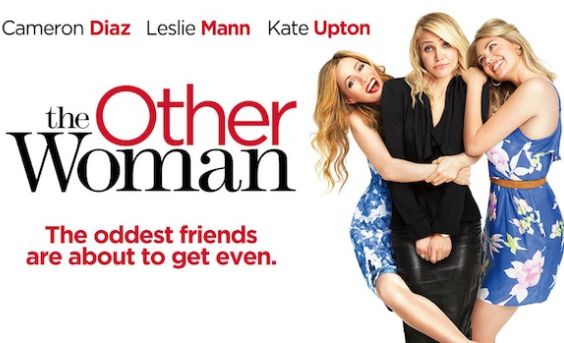
The Other Woman (2014)


Nick Cassavetes hasn’t exactly made his name with laugh riots. The son of John Cassavetes, he’s probably best known for directing such weepy melodramas as the massively successful "The Notebook" (2004) as well as "My Sister’s Keeper" (2009), in which adorable Abigail Breslin seeks emancipation from her parents so she no longer has to help keep her leukemia-stricken sister alive. (Bring tissues.)


So it’s surprising that "The Other Woman" is indeed as funny as it is—at least, in sporadic spurts. Cameron Diaz and Leslie Mann enjoy some sparky chemistry as the mistress and wife who discover they’re both in love with the same man. Trouble is, Cassavetes—working from a script by Melissa K. Stack—veers wildly between cautionary tale, revenge comedy, scatological raunchfest and female empowerment drama. Its trio of wronged women banding together and seeking redemption frequently calls to mind "The First Wives Club," which was similarly uneven in its zingy one-liners and contrived plot points.
But "The Other Woman" is reminiscent of another movie which also happened to come out in 1996: the made-for-TV true story "Frequent Flyer," starring Jack Wagner as a romantic rogue of an airline pilot who’s married to three different women in three different cities. (Please don’t ask me why I remember this.) And the cad in question in "The Other Woman," played by Danish hunk Nikolaj Coster-Waldau, happens to look distractingly like a younger version of Wagner with his blonde-haired, blue-eyed features and slick, cocky demeanor.
In theory, the joy of watching this kind of movie comes from seeing such a smooth operator squirm as his schemes are revealed and destroyed. And for a while, Diaz and Mann make for a likable odd couple as co-conspirators—two women who couldn’t be more different clashing and connecting as they unite for a common cause. Their doubts and decisions come from recognizable places. But then there’s a third woman, played by Sports Illustrated swimsuit supermodel Kate Upton, whose introduction unfortunately throws the whole movie into wacky, slapstick territory.
You’d think Diaz’s character, tough-as-nails Manhattan attorney Carly Whitten, wouldn’t abide by that kind of nonsense. (As Carly’s tough-love assistant, Nicki Minaj is a scene-stealer in her first on-screen role; her performance is one of the film’s few consistent pleasures.) A serial and unsatisfied dater, Carly thinks she’s finally found the man of her dreams in Coster-Waldau’s Mark King, who presents himself as a single and successful Internet entrepreneur.
But when Mark bails at the last minute on plans to meet Carly’s much-married father (Don Johnson) over drinks, Carly becomes suspicious. She shows up unannounced—in hot pants, no less—at his rambling, Cape Cod-style Connecticut home with plans to seduce him. Guess who answers the door? Mann’s Kate, the stay-at-home wife Carly never knew Mark had.
While the leggy, blonde Carly is all monochromatic minimalism, the petite, redheaded Kate is downright Stepfordian in her Lilly Pulitzer-style pastel prints. (Veteran costume designer Patricia Field of "Sex and the City" and "The Devil Wears Prada" fame makes these characters’ wardrobes pop distinctively.) Kate is also Carly’s opposite in terms of personality: She’s sweetly ditzy, a little needy and constantly chattering. Perhaps the contrast is a bit obvious but when the two women are on screen together—at least for the first half of the film—it works.
Mann is constantly on her verge of a breakdown, a character trait she’s exhibited previously in her husband, Judd Apatow’s films—particularly "This Is 40." But here, she’s honed the way she rides that edge and finds the confusion and humanity in Kate’s state. She may be annoying as hell but at least she recognizes she’s annoying as hell, which makes her strangely lovable.
Kate stalks Carly and insists that they must be friends because the same man has deceived and betrayed them both. No one else could possibly sympathize with the turmoil they’re going through. Strangely, this makes sense. They bond as women tend to bond in movies like this—over shoes and tequila shots—and at times it’s hard to tell whether Cassavetes intends these sequences (which he often depicts in montage form) as an homage to a genre or a parody of it. The use of Cyndi Lauper’s "Girls Just Want to Have Fun" as Kate and Carly find down-and-dirty ways to get even with Mark is so clichéd and on the nose, it’s discombobulating.
But the fun doesn’t stop there. As they sneak around behind Mark’s back and plot against him, they discover that he’s involved with another other woman: Upton’s twentysomething sexpot, whom they quickly clue in and befriend. Her name is Amber (of course) and she drives a Volkswagen Jetta (of course). That’s about the extent of the characterization the script (or perhaps the editing process) affords her. Amber is a series of seismic curves, stuffed inside a teeny-weeny white bikini. Indeed, when we (and Carly and Kate) first see her, she’s jogging along the Hamptons sand in the aforementioned swimwear—in slow motion, naturally—with shades of Bo Derek in "10." (Hopefully that sequence didn’t require a lot of takes, because it looks like it must have been painful for the buxom Upton.)
The model-turned-actress certainly has a likable enough screen presence but she’s just not up for the challenge of performing alongside such seasoned comedians. (It makes you wonder what an actress like Alice Eve might have done with the role.) At least she’s not alone in the eye candy department, though. Kate just happens to have a brother named Phil (Taylor Kinney of TV’s "Chicago Fire") who’s too good to be true: He’s a handsome, smart, gentlemanly contractor who just happens to be single—as if he’s been waiting for Diaz’s character his whole life.
Such plot contrivances abound from this point, along with not one but two instances of characters, um, graphically relieving themselves at inopportune moments. The joke isn’t funny the first time, and this kind of gross-out strain of comedy clangs uncomfortably with the feel-good message "The Other Woman" ostensibly is trying to convey. Any semblance of intelligent humor or insight into female aging that may have existed gets tossed out the window of Carly’s high-rise office by the end, with Mark behaving like a petulant child throwing a temper tantrum. (Desperation does not suit Coster-Waldau.)
While "The Other Woman" raises some thoughtful questions about independence, identity and the importance of sisterhood, ultimately it would rather poop on them and then throw them through a window in hopes of the getting the big laugh.

Genre: Comedy | Romance
Size: 809.44 MB
Quality: 720p
Resolution: 1280*536
Frame Rate: 23.976 fps
Language: English
Run Time: 1hr 49 min
IMDB Rating: 6.4/10
MPR: PG-13
Peers/Seeds: 2689/11736
Download vai :

Wednesday, July 23, 2014

Divergent (2014)


"Divergent" is all about identity—about searching your soul and determining who you are and how you fit in as you emerge from adolescence to adulthood. So it's all too appropriate that the film version of the wildly popular young adult novel struggles a bit to assert itself as it seeks to appeal to the widest possible audience.

It's the conundrum so many of these types of books face as they become pop-culture juggernauts and film franchises: which elements to keep to please the fervent fans and which to toss in the name of maintaining a lean, speedy narrative? The "Harry Potter" and "Hunger Games" movies—which "Divergent" resembles in myriad ways—were mostly successful in finding that balance.
In bringing the first novel of Veronica Roth's best-selling trilogy to the screen, director Neil Burger ("Limitless") and screenwriters Evan Daugherty andVanessa Taylor have included key moments and images but tweaked others to streamline the mythology and move the story along. The results can be thrilling but the film as a whole feels simultaneously overlong and emotionally truncated.
Folks who've read the book will probably be satisfied with the results, while those unfamiliar with the source material may dismiss it as derivative and inferior. (Stop me if you think you've heard this one before: "Divergent" takes place in a rigidly structured, dystopian future where one extraordinary girl will serve either as its destroyer or its savior.) But the performances—namely from stars Shailene Woodley and Theo James and Kate Winslet in a juicy supporting role—always make the movie watchable and often quite engaging.
In the fenced-off remnants of a post-war Chicago 100 years from now, society has been broken down into five factions—groups of people arranged by a primary, defining trait. The Amity are happy, hippie farmers who dress in shades of sorbet. The Candor run the judicial system and value truth about all else. The Erudite are the serious-minded scholars who wear conservative, dark blue. The Abnegation are known for their selflessness and modesty. And the pierced-and-tatted Dauntless are the brave soldiers who protect the city from … who knows what? Whatever the perceived threat is, it requires them to run, scream and practice parkour wherever they go.
Woodley's Beatrice Prior is a member of the Abnegation alongside her brother, Caleb (Ansel Elgort), and their parents (Ashley Judd and Tony Goldwyn). They dress in drab colors, eat simply and are only allowed to steal a quick glance in the mirror once every three months when it's time for a haircut. Basically, they're no fun, and Beatrice has a wild streak in her that she's been forced to suppress. 
When she undergoes the aptitude test required of all teens, which determines which faction is the best reflection of one's true nature, her results are inconclusive. She's got pieces of a few different places in her, which makes her what's known as Divergent, which makes her dangerous. Thinking for yourself is a naughty thing in this world, apparently; plus, the angsty inner conflict that rages within Beatrice is something to which the target audience for the book (and the movie) surely can relate.
At the annual Choosing Ceremony, where the teens use their test results to pick the faction they want to join for the rest of their lives—like the last night of sorority rush, mixed with the "Harry Potter" sorting hat—Beatrice dares to choose Dauntless. This means she can never see her family again. (Man, the rules are strict in dystopian futures.) But it also means she gets to train to unleash the bad-ass that's been lurking inside her all along.
Renaming herself Tris, our heroine must learn how to fight, shoot, jump from moving trains, throw knives and control her mind in a series of harrowing simulations, all while competing against a couple dozen other initiates in a demanding ranking system. Eric (a coolly intimidating Jai Courtney) is the merciless Dauntless leader who's taking the faction—which was founded on the notion of noble courage—in a more militant and vicious direction.
But the hunky trainer who goes by the name Four (James) is the one who will have a greater impact on the woman Tris will become. Quietly and generically brooding at first, James reveals more depth and shading to his conflicted character as the story's stakes increase. He and Woodley have an easy chemistry with each other, but the romance that took its time and smoldered on the page feels a bit rushed on the screen.
Similarly, the supporting figures who had identifiable personalities in the book mostly blend into the background here, including Tris' best friend, Christina (Zoe Kravitz). But it is extremely amusing to see Miles Teller, who played Woodley's first love last year in the wonderful "The Spectacular Now," serve as her enemy here as the conniving fellow initiate Peter. The smart-alecky Teller is also the only actor here who gets to have much fun. With the exception of a few major set pieces—the zip-line ride from the top of the John Hancock Center, for example—"Divergent" is a rather dark and heavy endeavor.
Woodley, though, by virtue of the sheer likability of her presence, keeps you hanging on, keeps you rooting for her. She may not have the blazing, rock-star power of Jennifer Lawrence as Katniss in "The Hunger Games," but there's a subtlety and a naturalism to her performance that make her very accessible and appealing. And when she needs to crank it up and kick some butt—as she does in a climactic scene with Winslet as the evil Erudite leader who's hell-bent on eradicating Divergents and maintaining control—she doesn't oversell it.
Plus, there could be worse role models for the eager adolescent audience than a young woman who's thoughtful, giving and strong—all at once. The inevitable sequel will show us what else she's got in her.

Download vai Torrent :

Blue Ruin (2014)


The beauty of film festivals is that the vast majority of the movies exist outside the vacuum of movie blogs, magazines, and water cooler conversations. They’re unknown quantities, and while many are destined to stay that way, each year a handful of titles explode from the periphery to mesmerize, entertain, and impress unsuspecting viewers.
Welcome to Blue Ruin.


Dwight (Macon Blair) is a bit of a loner. He lives in his car, parked on the side of a road near a Delaware beach, and spends his days scrounging for food, collecting cans and reading. A gentle wake-up knock on his car window precedes a disturbing piece of news. The man who killed Dwight’s parents is being released from prison. Single-minded but far from focused, Dwight fills the gas tank, pops the car battery into place and makes a beeline straight into hell.

“You point the gun. You shoot the gun.”
The setup here is economical, and the rest of the film follows suit, but rather than be a negative that simplicity actually elevates the film above its bigger budgeted, higher profile cousins. A Hollywood version of this tale would complicate things with unnecessary subplots, excessive exposition and time spent highlighting just how bad the bad guy and his henchmen really are. Here we stick with Dwight throughout, and the result is one of the most intimate and affecting revenge films in years.
Dwight is a broken, haunted man. Lost in his own head since the murders, he’s retreated into a solitary existence from a world that would allow such a thing to happen. He left behind family and friends, but now a single purpose propels him forward forcing him back into society. He’s no action hero or avenging angel though, and his efforts reveal a clumsy but determined man digging a deeper and bloodier hole by the minute.
Blair is the heart and soul of the film acting as beautifully in long dialogue-free scenes as he does in conversation with those he loves and those he hates. The camera gets lost in the sadness pouring from his eyes on more than one occasion, and the swirl of anger, confusion and loneliness draws viewers into a world none of us would enter willingly.
Writer/director Jeremy Saulnier is wise to trust not only his lead character and actor but also his audience. Plot details and motivations are never shoved in our direction like street corner pamphlets but are instead revealed only when necessary. Much is left for viewers to connect on their own, and it’s not nearly as complicated an endeavor as Hollywood likes to believe.
Saulnier also earns points for trusting in practical effects for his various scenes of brutality. Not only are they more visually arresting but they’re far weightier too. CGI blood may save a filmmaker money, but a practically accomplished attack that leaves a man’s slowly dying eye filling with the red stuff makes his death tangible in far more unsettling ways.
Blue Ruin is tragedy on an intimate scale, but don’t let its tiny budget fool you. It looks far more costly, which is fitting as its emotional toll is higher than the norm too.
The Upside: Macon Blair stuns; practical effects executed simply and impressively; almost an hour straight of steadily building tension; never spoon-feeds viewers
The Downside: Could actually have been longer, maybe; I still don’t know what the title means
On the Side: Dwight’s only friend in the world is played by Devin Ratray. That’s right. Kevin McCallister’s older, dickish brother is still alive and has a gun permit.

Genre: Thriller
Size: 735.29 MB
Quality: 720p
Resolution: 1280*536
Frame Rate: 23.976 fps
Language: English
Run Time: 1hr 32 min
IMDB Rating: 7.2/10
MPR: R
Peers/Seeds: 232/1408

 Download vai :

Tuesday, July 22, 2014

Rob the Mob (2014)


In 1991, as New York City stopped in its tracks to follow the trial of mob boss John Gotti, a story briefly took over the front pages, a sideshow to the main event: a crazy in-love couple from Queens, taking advantage of the chaos in the organized crime world, started holding up various Mafia social clubs, pocketing the cash. They knew the Mob wouldn't contact the police. And was it really a crime to steal from such obviously bad guys in the first place? "Rob the Mob," directed by Raymond De Felitta and written by Jonathan Fernandez, looks at the sideshow from multiple angles. Breezy, sleazy, and sometimes-intense, "Rob the Mob" depicts a very specific sliver of time in New York history, a time overrun by crack, graffiti, and omnipresent organized crime.


Tommy (Michael Pitt) and Rosie Uva (Nina Arianda) have recently emerged from short stints in prison for holding up a florist's shop. They are in love. Rosie has gotten a job at a debt collection agency, run by a smiling enthusiastic guy (Griffin Dunne) who likes to hire ex-cons (he himself did time for fraud). Rosie, a woman with an ingratiating supportive attitude and a big laugh which masks her intellectual shortcomings, convinces her boss to also hire Tommy. When money is tight one month, they decide on their reckless quick-cash crime spree. Rosie drives the get-away car and Tommy, wearing a ski-mask, does the stick-up, accidentally firing off the Uzi into the ceiling and back walls. The group of "wise guys" in the club empty their wallets, all while issuing threats of what they will do when they track him down. When Tommy and Rosie go home to their bleak cold-water flat, they laugh and commiserate over how easy it was.
"Rob the Mob" doesn't just stick with Tommy and Rosie. It looks at their crime spree from the perspective of the dogged Federal agent (Frank Whaley) searching for specific Intel on the structure and hierarchy of the New York crime families. We also meet a journalist named Jerry Cardozo (an excellent Ray Romano) who has been covering the Mob for 30 years, and writes a front page story about the mysterious criminal duo, naming them "Bonnie and Clyde". He is shocked when, one day, Rosie calls him at his desk to correct one of the facts in his story. We also get scenes of the paranoia within the Mob, brought on by the one-two punch of the Gotti trial and the sudden crime spree. The Mafia here is headed up by a reclusive boss with a mysterious past named "Big Al" (played by Andy Garcia, with a white Ernest Hemingway beard in a performance of coiled intensity.)
During one of their stick-ups, Tommy and Rosie steal the wallet of a guy named Joey D. (Burt Young). In the wallet is a folded piece of loose leaf paper, and on it is written what becomes known as "The List": a family tree of the Mob, its internal structure, its command set-up. Private home phone numbers are listed. As the Gotti trial goes on downtown, police and FBI work overtime trying to figure out who reported to whom in the organization, and, of course, there is no H.R. department. "The List" would represent the break they need. But Tommy and Rosie, whose bravery explodes into increasing delusional mania with each successful stick-up, decide to use "The List" as a bargaining chip with the Mob, and they start making threatening phone calls to everyone on it.
"Rob the Mob" romanticizes Tommy and Rosie, filming them in slo-mo dancing through raining dollar bills, and kissing in the rain on a deserted Coney Island boardwalk, but the couple lacks the iconic power of other famous crime-spree cinematic duos, including their namesake. The romantic treatment of some of their scenes and the sentimental soundtrack is all counter-acted by casting Pitt and Arianda, who inhabit their roles familiarly, grubbily, easily. Both actors portray characters who are clearly not smart, not even a little bit, but they do so without being patronizing about it. You don't get the sense that they, the actors, are "slumming". Tommy and Rosie have no self-awareness, and no powers of self-reflection. Tony award-winning Arianda, in particular, is fascinating to watch. She was fascinating to watch in her small part in "Midnight in Paris," where she droningly and happily repeated whatever her snobby husband said. Arianda's Rosie is filled with enthusiasm and support for those around her (watch, in particular, how she butters up her boss, cheering him on like they're at a pep rally), and despite her initial resistance to Tommy's plan, she finally embraces it wholeheartedly. She's not killing anyone. She's stealing from bad men. "What's the crime in that?" she asks Cardoza, grinning at him chummily over her slice of pizza. Arianda shows Rosie's shallow grasp of abstract concepts in a frozen smile and confused flicker in her eyes when confronted with something she doesn't understand. Cardoza says to her, "We got a saying in the newspaper world--" and she cuts him off, brightly, supportively, missing the entire point: "I love sayings! Slogans!"
The rest of the cast is populated by stalwart long-time New York actors, grounding the film in its location and era. Cathy Moriarty shows up in a heartbreaking cameo as Tommy's devastated mother, wrecked by a lifetime of disappointment and violence. Moriarty gives another unforgettable cameo performance in the upcoming "The Double". It's exciting to think of the direction her career is taking.
"Rob the Mob" is too cutesy a title for this dark grubby little tale.

Download :

Hercules Reborn (2014)


Hercules Reborn is a production of The Asylum—a film production company known for making so-called ‘mockbusters’.  These mockbusters are films that are released to coincide with the release of big studio epics in order to capitalize on the hubbub surrounding the big-budget movies.  They feature titles that are VERY similar to the bigger films, but you wouldn’t ever mix up these films with the originals!  I’ve reviewed a few of these, such as Apocalypse Pompeii (released to coincide with Pompeii) and Sleeping Beauty (to coincide with Malificent).   They also are the same folks who have given us the Sharknado franchise for what that’s worth.


With the upcoming release of the new Dwayne Johnson (‘the Rock’) movie Hercules in late July, The Asylum has brought out its latest mockbuster, Hercules Reborn.  The star of this film, naturally, is Hercules and he’s played by the pro wrestler/actor, John Hennigan.
As far as the film’s attention to detail goes, it’s very poor. The myths of Hercules are only vaguely used in this film and classical studies professors will have a conniption when they watch the film. However, EVERY Hercules film I have ever seen does exactly the same thing–they pretty much ignore the old myths and have the hero doing lots of things he never supposedly did. So, I’ll cut it some slack in this particular area.
I noticed that this film’s plot is very, very similar to the old ‘sword and sandals epics’ that the Italians were making in the late 50s and through much of the 1960s. Sometimes the hero was called Hercules, sometimes he was Maciste or Ursus or Goliath or even Samson–and sometimes the names just depended on which dub you saw! Sometimes the SAME movie had multiple versions and he would be called Hercules in one and Maciste in the other! In most cases, famous bodybuilders were used–whether they could speak the language or not! So, having Hennigan playing the part is pretty reasonable. But is it any good? Well, it’s not bad–and that is far better than I’d say about some of the other films I’ve seen from this company.


The film begins in a happy ancient Greek town…happy, happy, happy town. However, General Nikos is a jerk-face–and most people don’t realize how big a jerk-face he really is. By the time they come to realize it, it’s too late—he and his troops have murdered the king and queen and enslaved the people. And soon, he plans on a war simply to enrich himself and his men. However, one of the loyal officers and a few of his men have managed to escape and are searching for the legendary warrior, Hercules. Unfortunately, what they find is an alcoholic who burps much of his dialog. However, when he’s sober, he’s a lean, mean fighting machine–and he agrees to go because he, too, has a beef with Nikos. Can they stop him as well as manage to save the feisty princess who Nikos is forcing to become his bride? What do you think? There were a few things I really liked about this film. The princess was great. She was NOT just some victim waiting to be saved by the men but was a tough lady–and I appreciate that she had some depth. I also liked the general plot of the film–it sure made me remember the old Italian films–and this new version was a heck of a lot better. And, it’s very watchable…in an undemanding sort of way. Strikes against it was it’s less than believable city–as they only looked to have about 15 or 20 people in this city! A bigger budget like the upcoming Dwayne Johnson version obviously will have the budget and masses of people. Also, a few of the actors weren’t particularly good–especially their reactions to the coup, which were amazingly underplayed. Heck, this crazy general has butchered half the city–don’t you think this would make folks a tad emotional?!
As for Hercules himself, I just don’t know what to think. This version is the least heroic I’ve ever seen. He’s not mythically strong. He’s a bit of a knucklehead at times. And, folks will be surprised just how ordinary he seems. This guy is a great fighter, granted, but he doesn’t seem unstoppable or the sort that could take on an army all by himself. The way I see it, if you ignore his name and just see it as an action movie with a buff hero, it’s a lot more enjoyable.
Overall, I wouldn’t rush to see this one. But, it shows a bit more quality and is more watchable than I ever would have expected from The Asylum. Worth a look provided your expectations are not too high…and you have no classical studies friends watching it with you*!
*As a retired history teacher, you probably don’t want to go to seriously inaccurate historical films as well. I just can’t seem to sit there all night without eventually saying SOMETHING about the factual errors. So, I can understand and relate to the plight of the classical studies folks!

Download vai :

Need for Speed (2014)


In "Need for Speed," a character cites the oft-quoted phrase that a man in a big, flashy, expensive car "is overcompensating for something." The same can be said for this movie. It wears on its sleeve the desperation of trying to create another macho racing franchise like "The Fast and the Furious." That series had six movies to create, shape, modify and solidify its mythology. With five fewer tries, "Need for Speed" aims for "F&F's" level of goofy, fan-pleasing grandiosity while attempting the existential vengeance vibe of "Drive." The resulting mishmash is as exciting as getting a tow from AAA, and just as slow.


This type of movie was more fun—and more dangerous—when Roger Corman and other '70s B-movie producers made them. Screenwriter George Gatins hints at elements Peter Fonda or Warren Oates would have nailed, and there are moments when "Need for Speed" flirts with the darkness found in films like "Dirty Mary Crazy Larry" and "Race with the Devil."
Aaron Paul doesn't have the coolness nor the gravitas of '70s era Oates or Fonda, but I can't blame him for this film's failure. The script pulls every punch, opting for a safe, wimpy simplicity that insults the viewer. The characters who inhabit "Need for Speed" may as well be stick figures with the trope they represent written over their heads. There's not one note of interest nor complexity at all. An actor with Paul's talent deserves a better feature in which to make his leading actor debut.
Gatins' script is also so full of contrivances and coincidences that you'll be compelled to bang your head into the seat in front of you, sending your 3-D glasses flying into the air. (Note: Don't waste your money on the 3-D.) There's a sloppiness to the writing that is downright infuriating; each overly plotted moment is reconciled in ways that would get a failing grade in the cheesiest screenwriting class. It raises many "but wait…" questions, and the film is so sluggish that you'll have plenty of time to contemplate each one with disgust.
Of course, one must expect, and welcome, a certain level of preposterousness in a film like this. A good movie, however, will pump a viewer so full of adrenaline that problems are noticed only upon much later reflection. Director Scott Waugh makes sure you feel all 130 minutes of "Need for Speed," and even worse, he expects you to take this nonsense seriously. He pauses for all manner of false emotional effect, and the main character's "anguish" is expressed in ways that are unintentionally hilarious rather than heartbreaking. The sudden appearance of a preternaturally slow, somber version of "All Along the Watchtower" under a scene nearly sent Sprite shooting out of my nose. A solitary tear shed near the end would shame even the most melodramatic telenovela.
The source of all this drama is Tobey Marshall (Aaron Paul). Marshall is The One Who Drives, a car shop owner who enjoys racing with his co-worker cronies Joe (Ramon Rodriguez), Finn (Rami Malek) and best friend Pete (Harrison Gilberton). Benny (Scott Mescudi), a pal with a pilot license, flies overhead, radioing down traffic information and road conditions to the drivers as they navigate streets filled with clueless regular drivers. An early race gave me a rather icky feeling, especially when one racer hits a homeless guy's cart, nearly killing him. (Note to filmmakers: Cars crashing through fruit stands—cool. Cars hitting homeless people—NOT COOL.)
Into this chummy, platonic circle drives Dino (Dominic Cooper). Dino has a long rivalry with Tobey, so the latter should be suspicious when he's asked to complete the Mustang that auto maker Carroll Shelby was working on before he died. Tobey and crew do the job because there's a $3 million price tag on the finished product, of which they'll receive 25 percent. Helping Dino sell the car is Julia (Imogen Poots), a British woman whose "Meet Cute" with Tobey is an excruciatingly long variation on the "Oh, it's a girl and she knows guy stuff!" cliché.
Dino offers to race Tobey for the entire price, which leads to Dino committing vehicular homicide. Tobey winds up in jail for three years, wrongly convicted of killing his best friend. Dino rubs salt deeper in Tobey's wounds by proposing to Tobey's ex (and Pete's sister), Anita.
When Tobey gets out, his desire for vengeance isn't manifested by finding Dino and beating him to a pulp like a normal person. He instead wants to beat Dino in an illegal race called the DeLeon. Run by a crazed Michael Keaton, who seems to be channeling Jack Nicholson playing Max Headroom, the DeLeon is the MacGuffin in "Need for Speed." Most of the remaining movie involves a cross-country drive to the DeLeon with Tobey and Julia in the Mustang and the other guys in their respective cars and airplanes. It takes forever.
Even as mere car pornography, "Need for Speed" is a failure. The races are shot and edited in a manner that leeches them of any excitement, and I don't think a single car is onscreen more than five seconds at a time. Though the sound mix sends the appropriate rumbles through your person, there's no time to linger on and drool over these expensive marvels. In fact, you get a longer look at Finn's inexplicably exposed naked butt than you do at any car, which is appropriate. People seeking car-fueled excitement at "Need for Speed" will be left feeling "ass out."

Download vai :

Tuesday, May 06, 2014

Box Windows Phone and Windows 8.1


When it comes to storing your files in the cloud you’ve got a plethora of choices. That said, products like OneDrive, Google Drive, Dropbox and Box dominate the headlines. Today one of those is picking up an update. We haven’t seen an update for Box on Windows Phone (and Windows 8.1) in quite some time.
Head to the Windows Phone Store and you can see Box sitting at version 2.0.0.12. It’s a pretty major update, especially for those who use Box regularly. Here’s what’s new:
  • Improved menus, breadcrumbs and other navigation experiences
  • Improved transfer manager
  • Rebuilt apps
  • Language support for Polish and Turkish
We haven’t seen a major update to Box since they decided to ‘double down’ on Windows Phone and Windows 8 last year. The apps were later updated a few months later to pick security updates. Today’s update improves the Box Windows Phone app by improving the UI throughout and rebuilding the app.
Box
The team at Box is saying that these apps have been completely rebuilt from the ground up. The apps are now faster and more reliable. Box has a blog post out about the apps for Windows Phone and Windows 8.1. They don’t specifically cite detailed changelogs in the blog post, instead we’re seeing those listed in the Windows Phone Store and Windows Store.
According to the Windows Store, here’s what you get with Box on Windows 8.1: update includes new snap view layouts for Windows 8.1, new search control inside the app for Windows 8.1, new large Live tile and smoother file preview pages with progressive loading.
Box Windows Screenshots
Big updates for Box users on Windows Phone and Windows 8.1. Download the apps and let us know what you think!
Download Box from the Windows Phone Store.
Download Box from the Windows Store.
Via: Box